
Epoxy flooring costs vary widely because the final price reflects far more than the visible finish. Current Australian price guides place professionally installed systems at roughly $40 to $90 per square metre, while complex decorative or heavy-duty applications can exceed $150 per square metre.
The difference comes from the work beneath the surface, like diamond grinding, crack repair, moisture assessment, primer selection, epoxy thickness, decorative flakes, and UV-stable or anti-slip topcoats.
This is why two floors with the same area can receive very different quotes. Garages, homes, patios, driveways, pool surrounds, workshops, and warehouses each place different demands on the coating due to traffic, sunlight, water, chemicals, and daily wear.
A properly specified epoxy system protects concrete, limits dusting, resists stains, and simplifies cleaning.
Epoxy Flooring Cost Calculator
Get an instant planning estimate for your floor. This is a guide only — your final price is confirmed after a free site inspection.
Planning estimate only, based on the price guides in this article. Slab condition, exact prep required, access and finish choice can move the final number up or down. For an accurate price, request a free site inspection.
Get an Obligation-Free QuoteEpoxy Flooring Cost per Square Metre
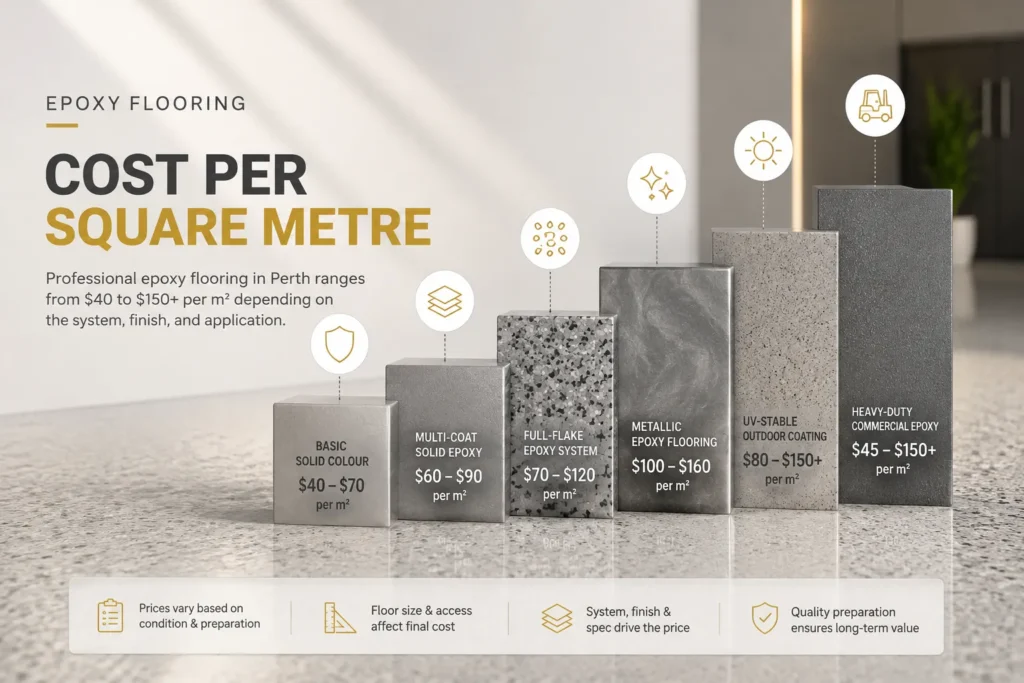
Epoxy flooring in Perth generally costs from about $40 per m² for a basic coating over a sound, prepared slab to $150+ per m² for decorative, outdoor, or heavy-duty systems. Most garage and residential projects sit in the middle of that range.
| Epoxy flooring system | Typical installed price guide | Common use |
| Basic solid-colour coating | $40–$70 per m² | Low-traffic areas with sound concrete |
| Multi-coat solid-colour epoxy | $60–$90 per m² | Garages, workshops, and indoor residential floors |
| Full-flake epoxy system | $70–$120 per m² | Garages, patios, workshops, and showrooms |
| Metallic epoxy flooring | $100–$160 per m² | Feature areas, interiors, and showrooms |
| UV-stable outdoor coating system | $80–$150+ per m² | Alfresco areas, driveways, and pool surrounds |
| Heavy-duty commercial epoxy | $45–$150+ per m² | Warehouses, workshops, and industrial floors |
These are planning figures only. Your final price depends on the slab condition, floor size, coating specification, access, and site requirements.
Small floors usually cost more per square metre because the same setup, grinding equipment, preparation, and labour are required for a 15 m² room as for part of a larger garage. Larger open floors can achieve a lower per-m² rate when the concrete is in good condition.
Epoxy Flooring Costs by Project Type
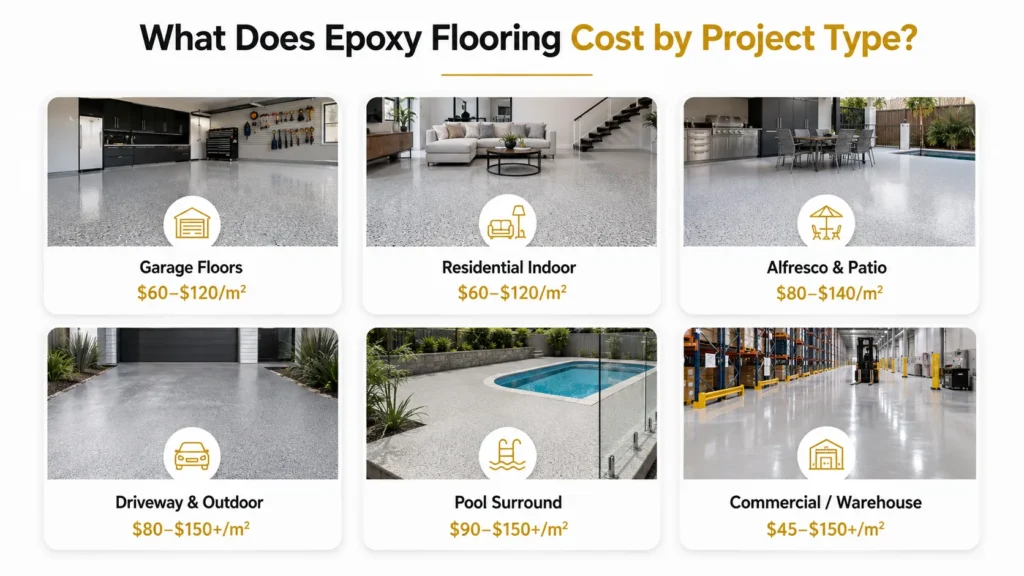
The purpose of the floor affects the coating system, preparation level, and final cost. A decorative garage floor does not need the same system as a sun-exposed driveway or a warehouse with forklift traffic.
Garage Epoxy Flooring Costs
Garage epoxy flooring typically costs $60 to $120 per m² for a professionally prepared multi-coat or full-flake system. A standard double garage of around 36 to 40 m² commonly costs $2,500 to $4,500.
The final price depends on:
- Oil stains, tyre marks, cracks, or damaged concrete
- Whether old paint or coating needs to be removed
- The selected flake blend and topcoat
- Whether the garage receives direct sunlight
- Required slip resistance and finish level
A full-flake system is a popular option for Perth garages because it hides minor dirt and marks better than a plain glossy floor while still being easy to maintain.
Residential Indoor Epoxy Flooring Costs
Indoor residential epoxy flooring usually costs $60 to $120 per m², depending on the finish and the condition of the concrete. Solid-colour systems are generally more affordable than decorative metallic finishes.
Indoor epoxy can suit living areas, kitchens, hallways, rumpus rooms, and workshops where a seamless, easy-clean surface is preferred. The slab still needs proper grinding and moisture assessment before coating. A visually clean concrete floor is not always ready for epoxy.
Alfresco and Patio Coating Costs
Alfresco and patio coating projects commonly cost $80 to $140 per m². Outdoor areas need a coating system suited to Perth heat, UV exposure, water, and daily foot traffic.
A patio price may increase when the area has:
- Direct afternoon sun
- Existing paint or sealer
- Cracks or uneven sections
- Drains, steps, or detailed edges
- A requirement for added slip resistance
Standard indoor epoxy is not always the right choice for a fully exposed outdoor space. The quote should clearly state whether a UV-stable topcoat or exterior-compatible coating system is included.
Driveway and Outdoor Concrete Coating Costs
Driveway and outdoor concrete coating costs often start around $80 per m² and can exceed $150 per m² for larger repairs, anti-slip finishes, or high-performance exterior systems.
Driveways need more than a good-looking finish. They must handle vehicle traffic, hot tyres, UV exposure, rain, and surface movement. Proper grinding, crack repairs, and the correct topcoat are essential. A cheap indoor-style epoxy system may not perform well in these conditions.
Pool Surround Epoxy Coating Costs
Pool surround coatings commonly cost $90 to $150+ per m² because safety and weather resistance are central to the system design.
A pool-area coating should be selected for:
- Wet-foot traffic
- Slip resistance
- Chlorine and chemical exposure
- Strong UV exposure
- Easy cleaning
- Comfort and appearance
The right anti-slip finish improves traction without making the surface unnecessarily rough or difficult to clean.
Commercial, Warehouse, and Workshop Flooring Costs
Commercial epoxy flooring can range from $45 to $150+ per m². Large, open floors with limited repairs may have a lower rate per square metre. Heavy-duty systems cost more because they may need thicker coatings, additional preparation, line marking, non-slip finishes, or fast return-to-service options.
Commercial pricing depends on:
- Forklift, vehicle, foot-traffic, and chemical exposure
- Required slip rating or safety specification
- Downtime restrictions and after-hours installation
- Concrete repairs, joints, and moisture issues
- Coating thickness and number of layers
- Access for grinding and material handling
For commercial floors, the coating system should be selected around the actual use of the space. A decorative residential coating is not automatically suitable for a workshop or warehouse.
How the Type of Epoxy System Affects the Price
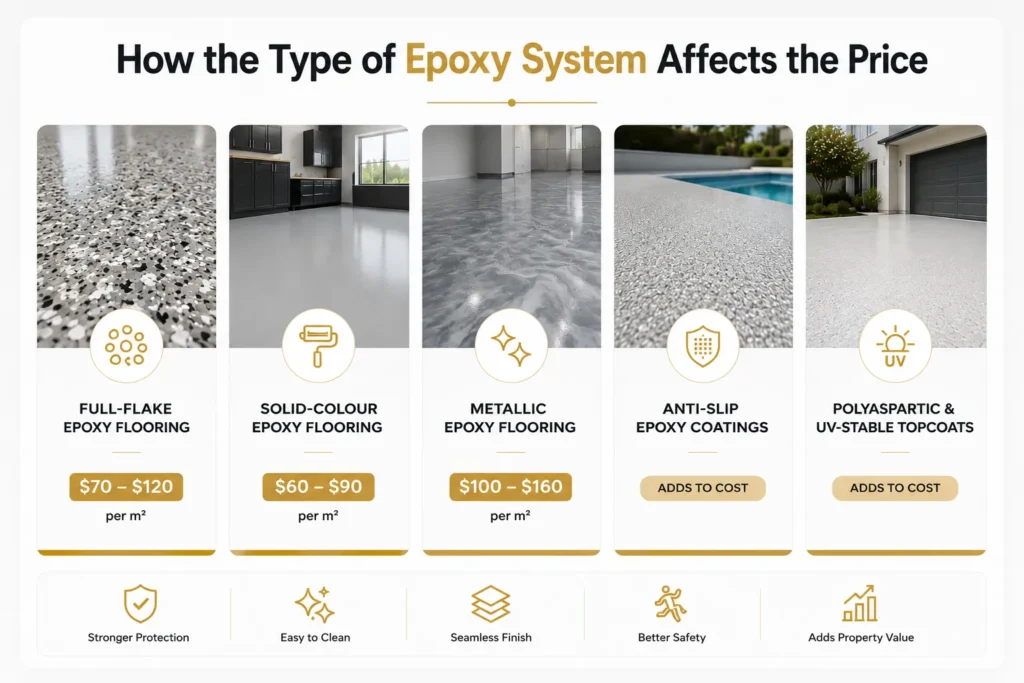
The epoxy system has a direct impact on cost because each option uses different materials, labour, and finishing steps.
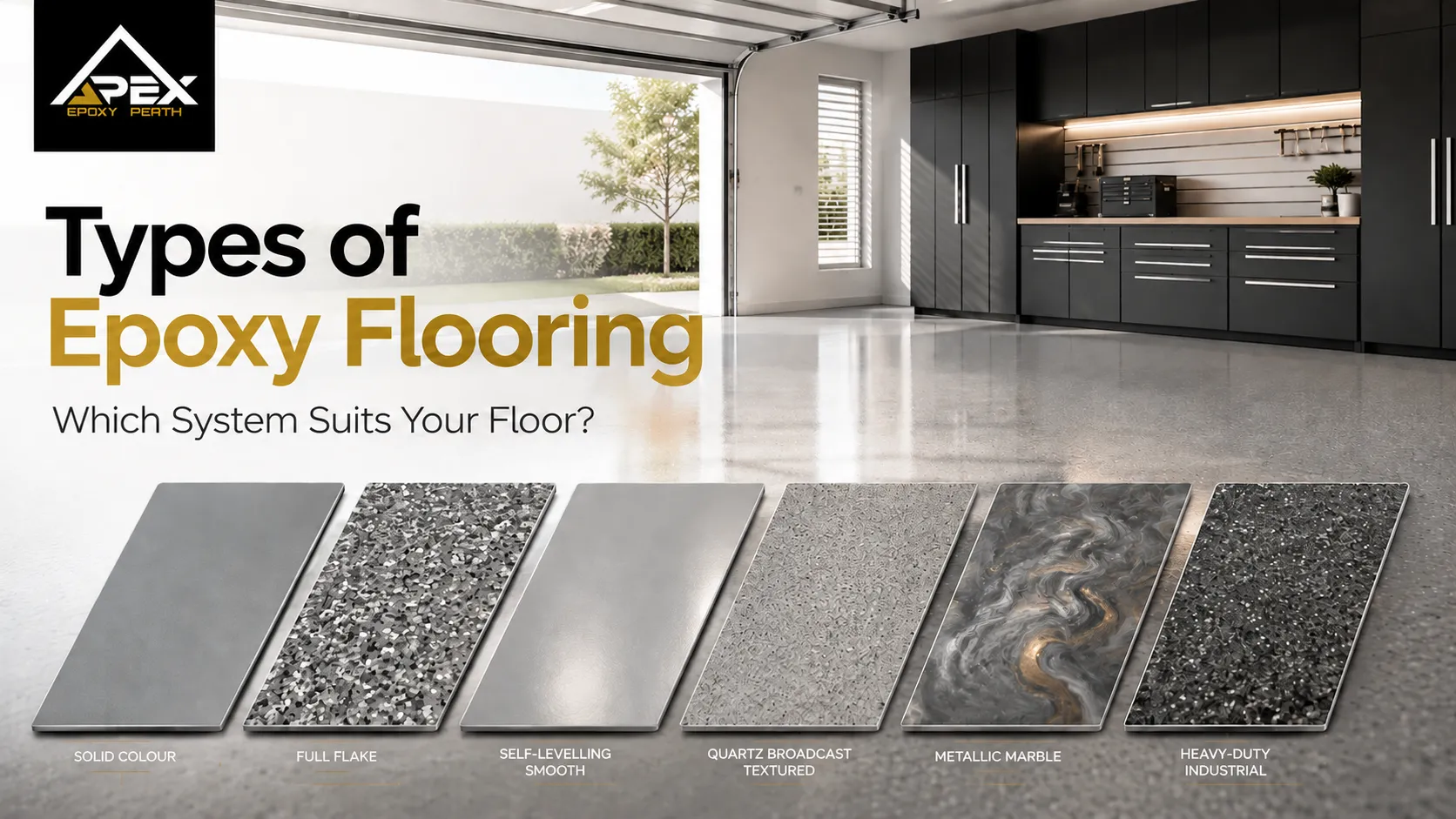
Full-Flake Epoxy Flooring
Full-flake epoxy flooring usually costs $70 to $120 per m². It includes a coloured base coat, decorative flakes, and a clear protective topcoat.
This system is popular for garages and workshops because it provides a clean, modern appearance and helps disguise minor dust, dirt, and tyre marks. The final cost depends on the condition of the slab, the selected flake blend, and the topcoat specification.
Solid-Colour Epoxy Flooring
Solid-colour epoxy flooring generally costs $60 to $90 per m² for a professionally installed multi-coat system.
It creates a simple, seamless finish that works well in garages, storage areas, workshops, and some commercial settings. It is often more affordable than full-flake or metallic epoxy, but it can show dirt, scratches, and slab imperfections more clearly.
Metallic Epoxy Flooring
Metallic epoxy flooring typically costs $100 to $160 per m² because it requires more design work, careful application, and specialised finishing.
Metallic epoxy is best suited to feature areas, showrooms, living spaces, and interiors where appearance is the priority. Every metallic floor is different, so the final look and price depend on the number of colours, design complexity, and clear-coat finish.
Anti-Slip Epoxy Coatings
Anti-slip epoxy coatings can increase the total price because they require the right aggregate, application method, and topcoat. They are often recommended for pool surrounds, outdoor entertaining areas, commercial kitchens, workshops, and wet areas.
The goal is to create appropriate traction for the space. Too little grip can create a safety issue. Too much aggregate can make the floor harder to clean.
Polyaspartic and UV-Stable Topcoats
Polyaspartic and UV-stable topcoats can add to the cost of an epoxy flooring system, but they are important for areas exposed to direct sunlight, heat, hot tyres, or weather.
In Perth, UV protection matters for outdoor concrete and garages with regular sun exposure. The final quote should identify the topcoat product and explain whether it is designed to resist yellowing, improve durability, or provide additional slip resistance.
What Is Included in a Professional Epoxy Flooring Quote?
A professional epoxy flooring quote should explain the full scope of work. It should not only show a total price and a vague description such as “epoxy floor coating.”
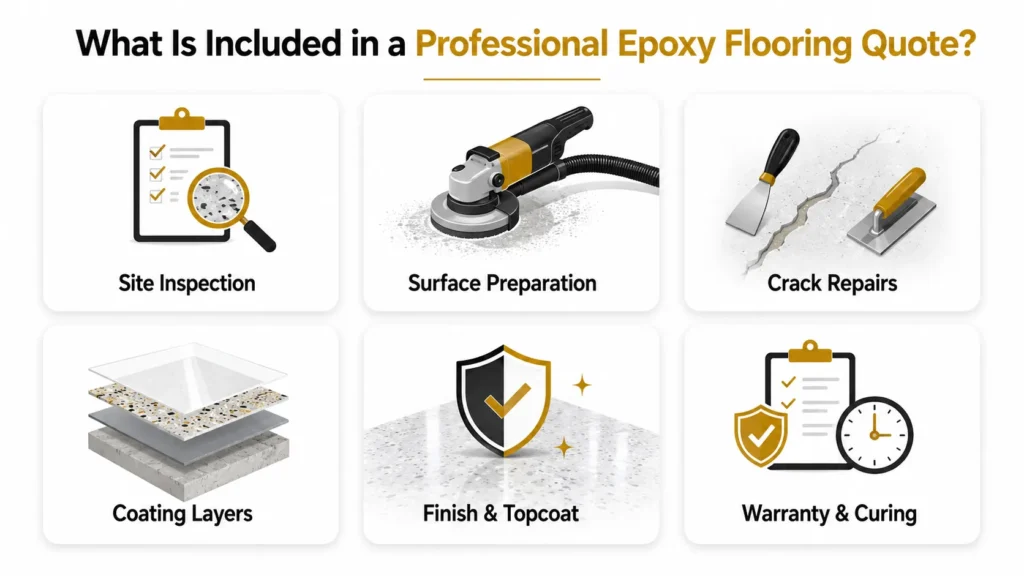
A clear quote should include:
- Site inspection and concrete assessment
- Mechanical diamond grinding or another stated preparation method
- Crack, joint, or minor concrete repairs
- Removal of loose paint, failed coatings, or surface contaminants where required
- Primer coat, epoxy base coats, flakes, and clear topcoat
- Surface protection around walls, doors, drains, and edges
- The selected colour, flake blend, and finish level
- Anti-slip or UV-stable topcoat requirements
- Curing guidance for walking, vehicles, or heavy equipment
- Workmanship warranty details and exclusions
At Apex Epoxy Perth, preparation is not treated as an optional extra. Diamond grinding helps open the concrete surface so the coating can form a stronger bond. This is one of the main differences between a floor that performs well and one that peels prematurely.
What Can Increase the Cost of Epoxy Flooring?
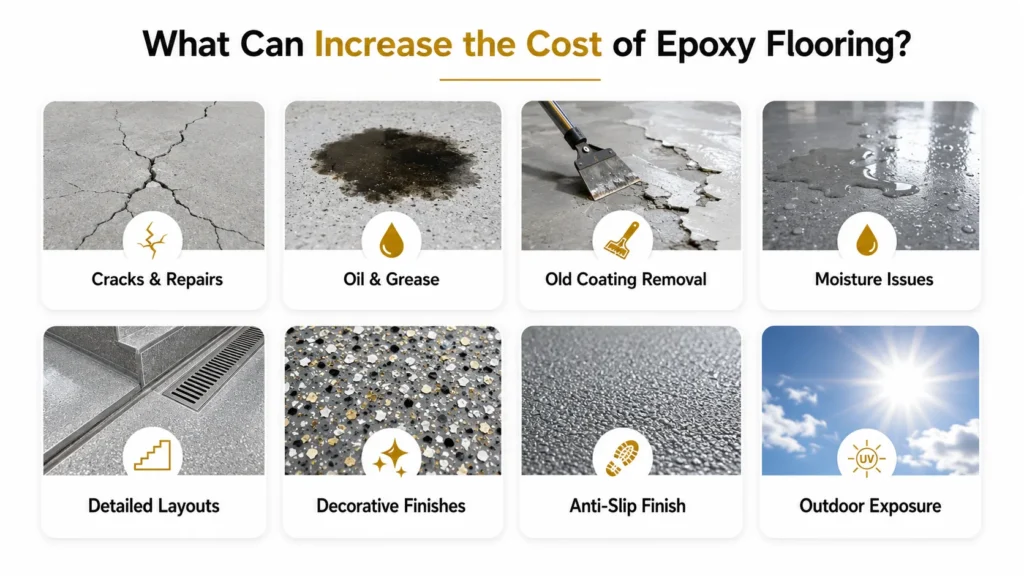
Epoxy flooring costs increase when the concrete needs more work before it can be coated or when the project requires a higher-performance system.
Common cost factors include:
- Cracks and concrete repairs: Cracks, spalling, uneven sections, and damaged joints need repair before coating.
- Oil and grease contamination: Garage and workshop slabs often need additional treatment before epoxy can bond correctly.
- Old paint or coating removal: Failed coatings, adhesives, and sealers may need to be mechanically removed.
- Moisture issues: Moisture in the slab can cause bubbling, peeling, or coating failure if not assessed properly.
- Detailed floor layouts: Steps, drains, pillars, tight edges, and multiple rooms add labour time.
- Decorative finishes: Metallic effects, custom colours, and premium flake blends can increase material and labour costs.
- Anti-slip requirements: Wet or high-risk areas may need specialised additives or a textured finish.
- Outdoor exposure: UV-stable topcoats and exterior-compatible systems cost more than a basic indoor epoxy coating.
- Commercial scheduling: After-hours work, staged installation, safety requirements, and fast return-to-service systems can affect the quote.
How to Compare Epoxy Flooring Quotes Properly
The lowest quote is not always the lowest-cost option over time. Compare the preparation, coating build-up, repairs, and warranty before deciding.
- Ask what surface preparation method is included. Mechanical diamond grinding is different from simply washing or acid etching the slab.
- Confirm crack repairs and existing coating removal. Ask whether these are included, allowed for, or priced separately.
- Check the coating system and number of layers. A primer, base coat, flake layer, and clear topcoat are not the same as one thin coating.
- Ask whether a UV-stable or anti-slip topcoat is included. This matters for sun-exposed garages, patios, driveways, pool surrounds, and wet areas.
- Confirm curing time, exclusions, and workmanship warranty. Know when you can walk, park vehicles, or return equipment to the floor.
A useful question to ask is: “What preparation and coating layers are included in this price?” A contractor should be able to answer clearly.
How to Get an Accurate Epoxy Flooring Price
The most accurate epoxy flooring price comes after inspecting the slab. Before an inspection, you can still provide enough information to receive a useful estimate.
Share the following details:
- Approximate floor size: Measure the length and width in metres.
- Photos of the concrete: Include cracks, stains, old coatings, drains, edges, and problem areas.
- The intended use: Explain whether the area is a garage, patio, driveway, pool surround, workshop, warehouse, or living space.
- Your preferred finish: Mention whether you want full flake, solid colour, metallic epoxy, or an anti-slip surface.
- Sun and weather exposure: Let the installer know whether the area receives direct sunlight or is fully exposed to rain.
- Access and timing requirements: Commercial projects may need staged work or after-hours installation.
Apex Epoxy Perth provides obligation-free quotes and site inspections across Perth. We assess the concrete, explain the right preparation and coating system, and provide a clear scope before work begins.
Frequently Asked Questions
How much does it cost to epoxy a double garage floor?
A standard double garage of around 36 to 40 m² typically costs $2,500 to $4,500 for a professionally installed full-flake epoxy system. The final price depends on concrete repairs, preparation, coating type, and whether UV or anti-slip protection is required.
Is epoxy flooring cheaper than tiles or polished concrete?
Epoxy flooring can be more cost-effective than tiles when a suitable concrete slab already exists because it does not require tile supply, adhesive, grout, and separate installation. Polished concrete can also cost more when the slab needs extensive grinding, repairs, and finishing. The best option depends on the slab condition, appearance you want, and how the space will be used.
Can epoxy flooring be installed over cracked concrete?
Yes, many cracked concrete floors can be coated after proper repair and preparation. The installer needs to assess whether the cracks are minor surface defects or signs of ongoing slab movement. Stable cracks can often be repaired before coating. Active structural movement may need a different solution.
How long does epoxy flooring last?
A professionally installed epoxy floor can last 10 to 20 years in a well-maintained residential garage, depending on traffic, preparation, coating quality, and exposure to sunlight or chemicals. Commercial floors may need recoating sooner when exposed to heavy vehicles, machinery, or constant traffic.
Does epoxy flooring cost more for outdoor areas?
Outdoor epoxy and concrete coating systems often cost more because they need to manage UV exposure, weather, water, and slip resistance. A standard indoor epoxy system may not be suitable for a driveway, patio, or pool surround without a UV-stable, exterior-compatible topcoat.
What is the cheapest epoxy flooring option, and is it worth it?
A basic solid-colour coating over clean, prepared concrete is usually the lowest-cost professional option. It can be worth it for a low-traffic area with sound concrete. However, a cheap system becomes poor value if it skips grinding, crack repair, or proper topcoat protection. The right system should match the condition of the slab and how you plan to use the floor.
Conclusion
Epoxy flooring is not priced by square metres alone. The concrete condition, preparation method, coating system, finish, and intended use all affect the final cost.
For most Perth homeowners, a professionally installed epoxy floor is a practical long-term upgrade for a garage, workshop, patio, or other concrete area. Focus on the full scope of the quote, not just the lowest advertised price. Proper surface preparation, suitable coating build-up, and the right topcoat are what protect your investment and help the floor last.
If you are planning an epoxy flooring project in Perth, contact Apex Epoxy Perth for a free site inspection and a clear, obligation-free quote.