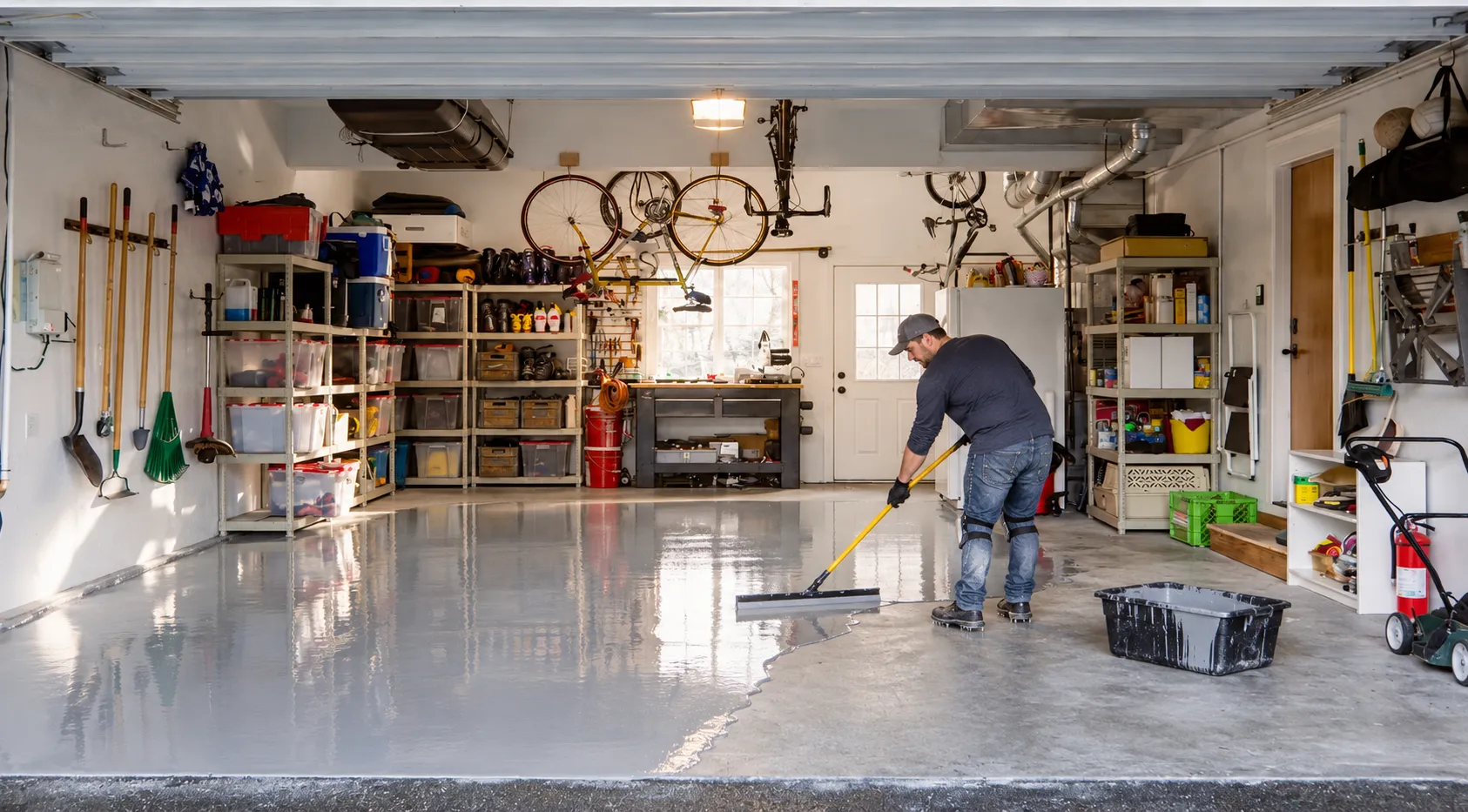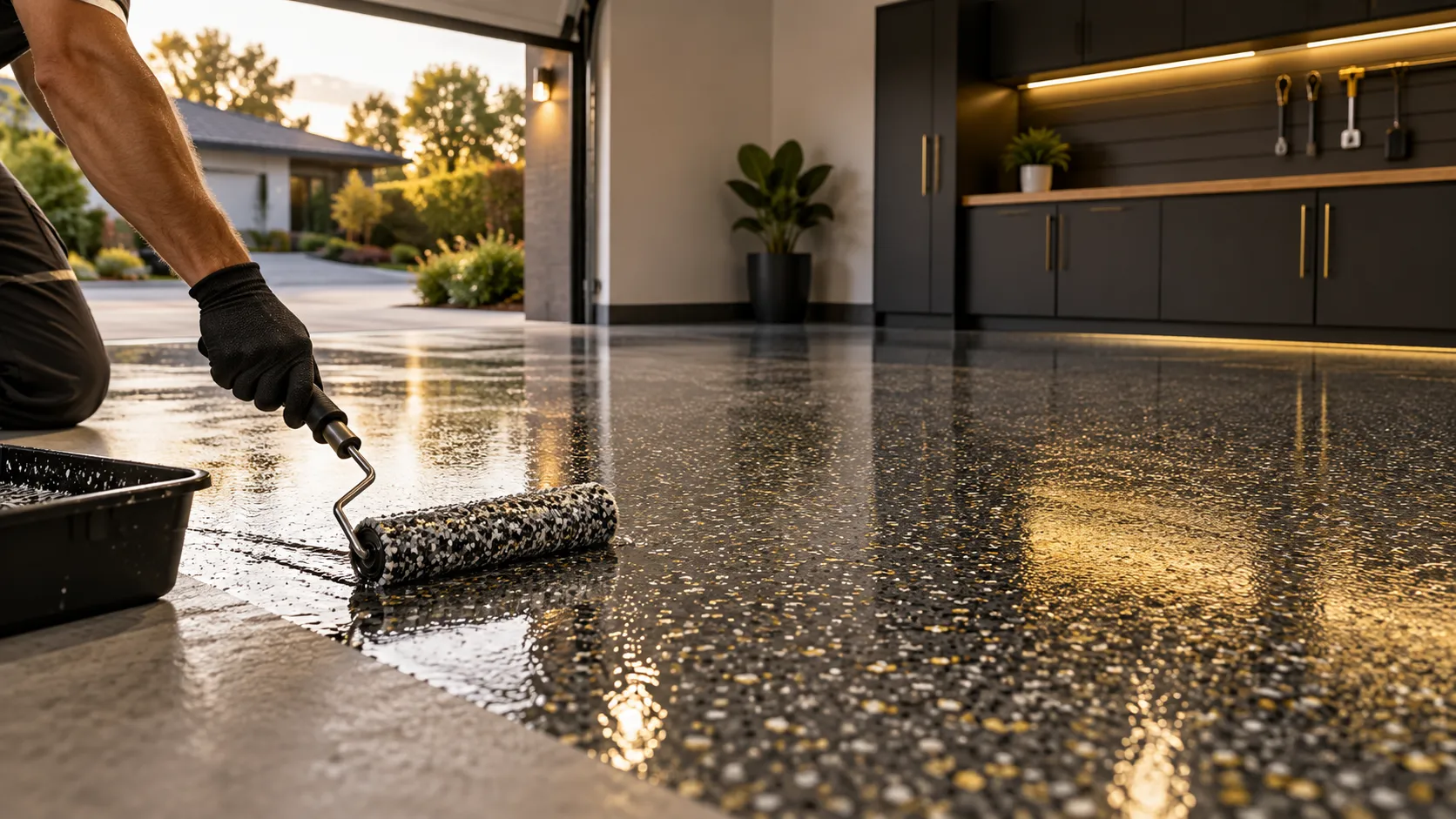

Epoxy flooring is a two-part coating system made by mixing resin with a hardener. Its safety depends on the specific product, how it is applied, ventilation, and whether it has reached the manufacturer’s full-cure stage.
The main exposure risk is during mixing, application and curing, not from normal contact with a properly cured floor.
Uncured epoxy products can irritate skin and may cause allergic sensitisation, while volatile chemicals in some flooring systems can affect indoor air during installation. Safe Work Australia identifies epoxy resins as a known cause of allergic contact dermatitis in workplace settings.
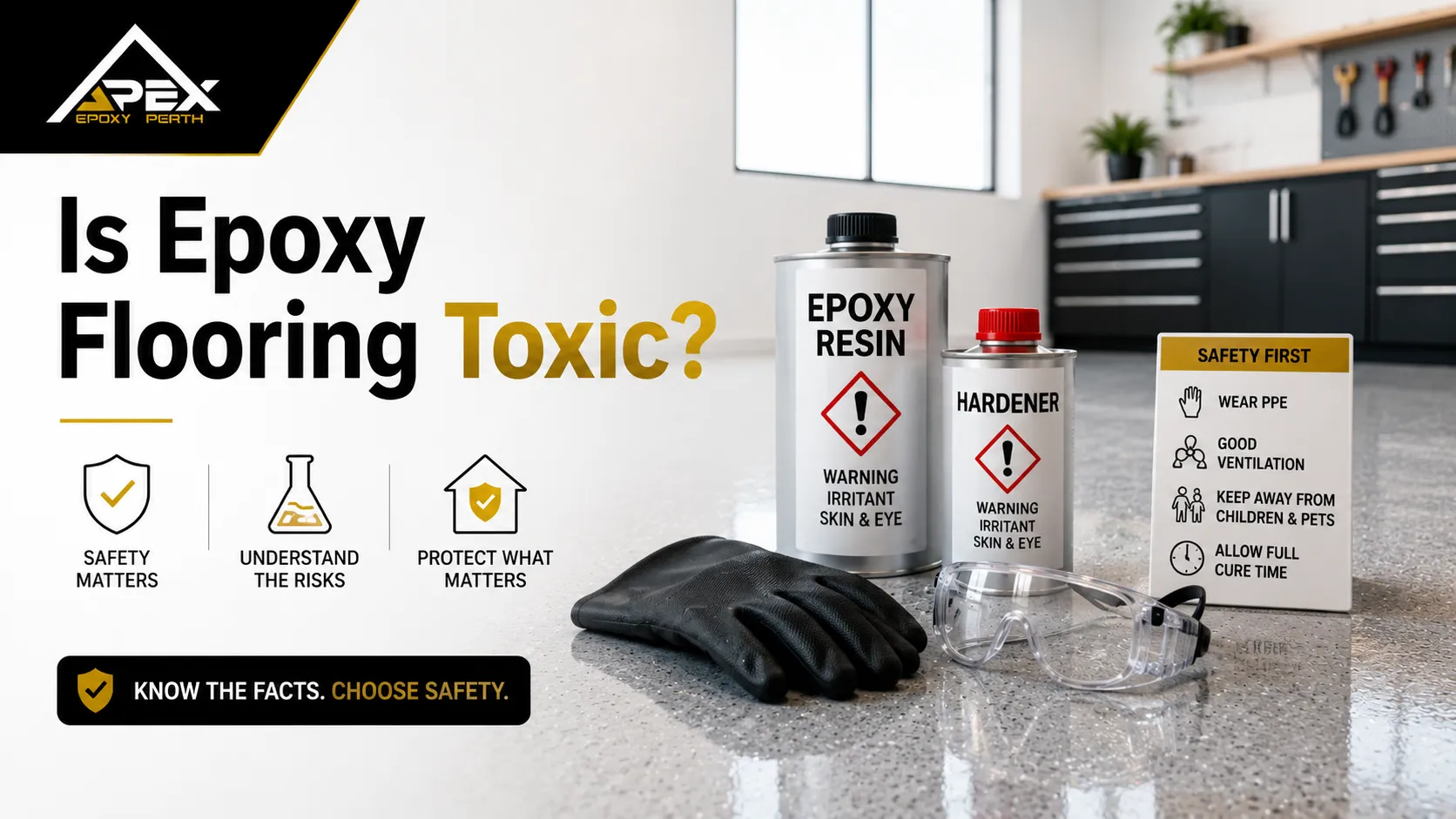
Is Epoxy Flooring Toxic?
Epoxy flooring is not automatically toxic in normal use, but uncured resin, hardener, solvents and additives can be hazardous if they contact skin, are swallowed, or are inhaled at significant concentrations.
A correctly mixed, fully cured epoxy floor presents a much lower exposure risk than the wet materials used to install it.
The word “epoxy” does not describe one identical product. Flooring systems can include a primer, epoxy base coat, decorative flakes or aggregate, and a topcoat. Each component has its own safety data, VOC content and cure requirements.
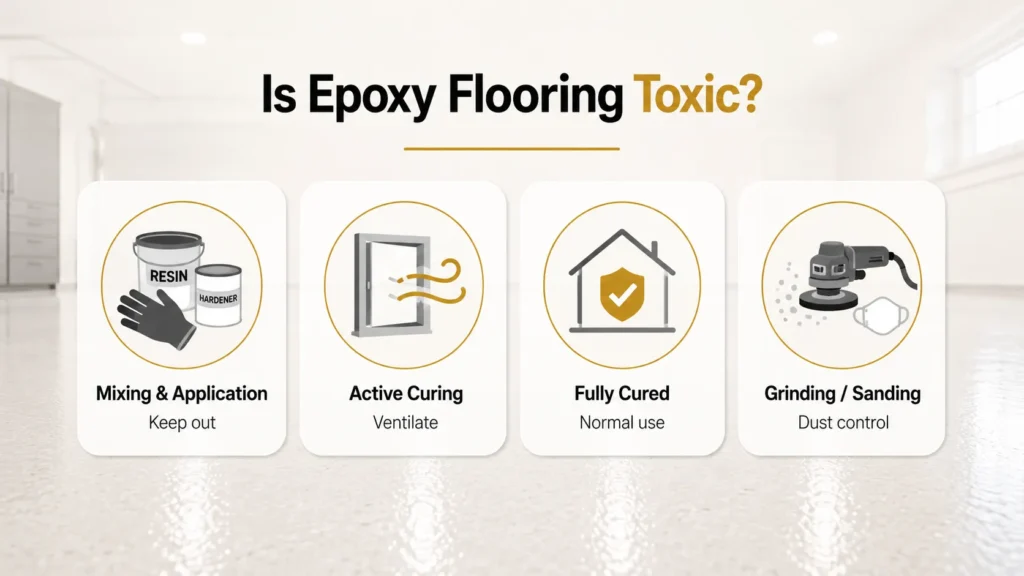
| Flooring stage | Main concern | Appropriate household action |
| Mixing and application | Direct contact with liquid resin, hardener, solvents and cleaning products | Keep residents, pets and children out of the work zone |
| Active curing | Incomplete chemical cure and possible odour or VOC release | Maintain the installer’s ventilation and access restrictions |
| Fully cured | Coating has developed its intended physical and chemical properties | Resume normal use only after the documented full-cure time |
| Sanding, grinding or burning an old coating | Dust or decomposition products | Use suitable dust control and professional safety measures |
Uncured epoxy can cause skin irritation, rashes and allergic sensitisation. Occupational safety guidance also warns that repeated exposure can make a person react to very small future exposures. OSHA notes that uncured epoxy resins can present a significant skin-exposure hazard.
What Fumes and VOCs Are Released During Epoxy Floor Installation?
“Epoxy fumes” is a general term people use for the odour, vapours and airborne chemicals present during installation. The actual exposure depends on the flooring system. Some products are water-based, some are solvent-based, and some are high-solids or solvent-free systems.
VOCs, or volatile organic compounds, are chemicals that evaporate into the air from certain liquids and solids. They can be released by coatings, primers, thinners and cleaning solvents.
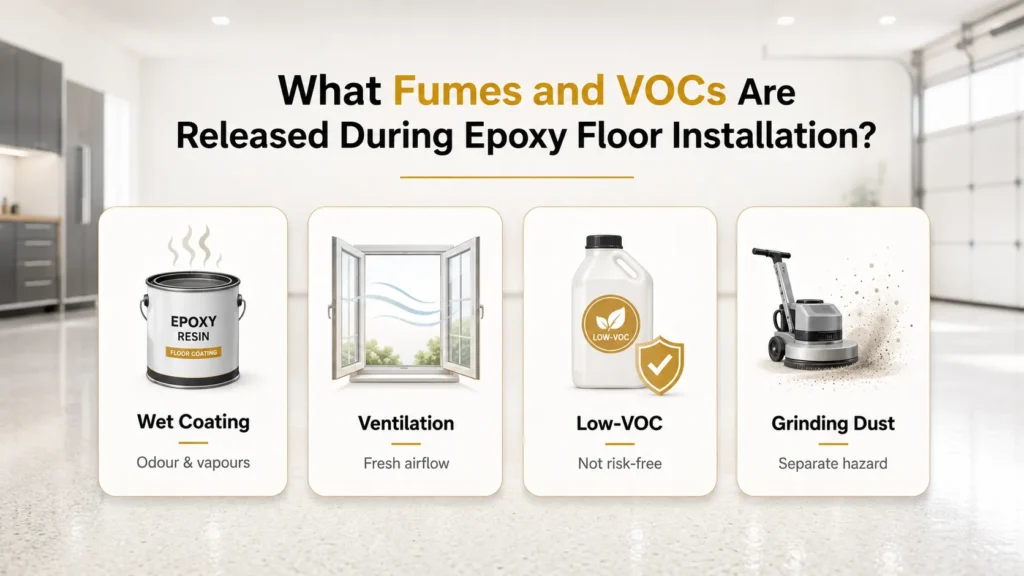
The US EPA notes that VOC exposure can cause symptoms such as eye, nose and throat irritation, headaches and nausea, although symptoms and risk depend on the chemical, concentration, ventilation and individual sensitivity.
A low-VOC label is useful, but it does not mean a product is harmless while wet. Low-VOC products can still contain reactive resin and hardener components that require gloves, eye protection, ventilation and controlled access.
A noticeable smell also does not prove that a floor is unsafe, and no smell does not prove that curing is complete.
Odour sensitivity varies between people. The reliable checks are the selected product’s Safety Data Sheet (SDS), Product Data Sheet (PDS), installation conditions and full-cure instructions.
Surface preparation also needs to be managed properly. Diamond grinding creates concrete dust, which is a separate risk from epoxy vapour. Professional preparation should use appropriate dust extraction and safe work procedures.
Is Epoxy Flooring Safe for Pets, Children and Sensitive Household Members?
A fully cured epoxy floor is generally suitable for normal household use. Pets and children should not enter the work area while the coating is being mixed, applied or curing.
They can touch wet coating, walk through it, ingest flakes or residues, or be exposed to odours and vapours in an enclosed area.
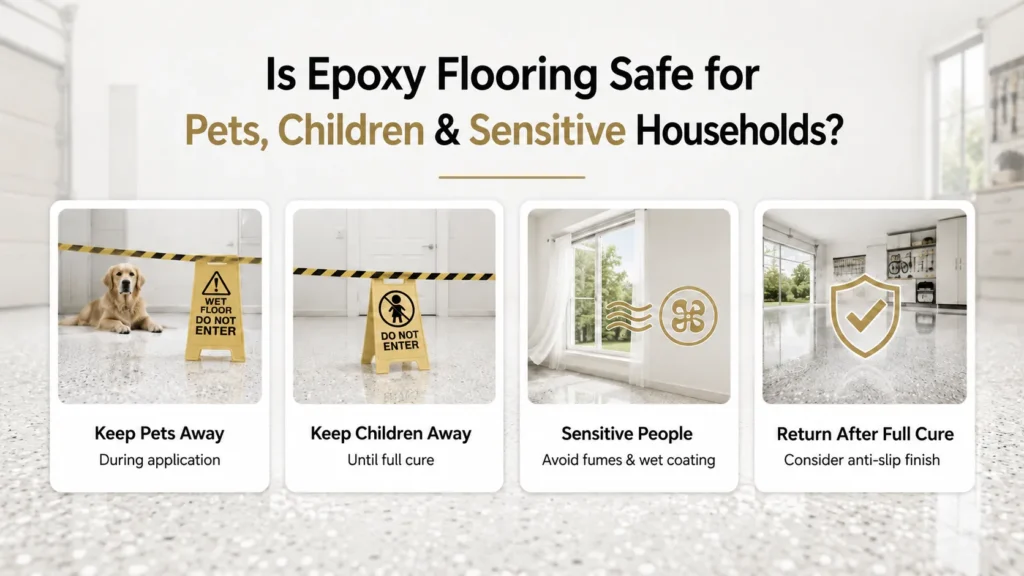
Keep the following away from the area until the installer confirms full cure:
- Dogs, cats, birds and other pets
- Children and anyone likely to touch or walk on the coating
- Pet bowls, toys, bedding and prams
- Food, stored belongings and vehicles
- Anyone with asthma, respiratory illness, chemical sensitivity or a history of severe skin reactions
If someone in the household is pregnant, has asthma, has severe allergies, or is highly sensitive to odours, discuss the installation plan before work starts.
The practical approach is to reduce unnecessary exposure: keep the person away from the work zone, follow the product-specific cure schedule, and seek individual medical advice where needed.
Pet safety also includes slip resistance. A smooth, glossy epoxy floor can become slippery when wet. For garages, laundries, entries, patios or pool-adjacent areas, ask about a suitable anti-slip aggregate or textured finish.
How Long Does Epoxy Flooring Take to Cure?
Epoxy can feel dry or hard before it is fully cured. “Walk-on time,” “light traffic” and “full cure” are different stages. A floor that can take light foot traffic is not necessarily ready for pets, furniture, tyres, heavy equipment or chemical spills.
Temperature has a major effect. Cooler concrete slows the reaction, while a fast-cure system may return to service much sooner than a standard epoxy system.
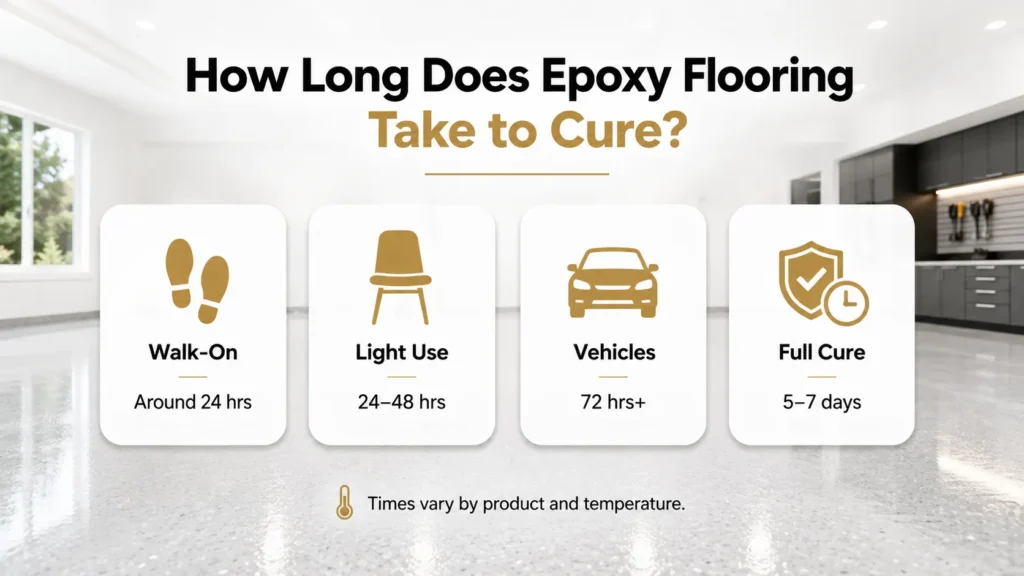
| Product example | Temperature | Foot traffic | Full cure |
| Standard Sikafloor 264 epoxy | 20°C | Approx. 24 hours | Approx. 7 days |
| Standard Sikafloor 264 epoxy | 10°C | Approx. 72 hours | Approx. 10 days |
| Luxafloor FCF fast-cure floor system | 25°C | Approx. 2 hours | Approx. 1 day |
These are product examples only—not a universal return-to-use schedule. Standard epoxy systems can take around a week to fully cure at moderate temperatures, while specialist fast-cure systems can be ready sooner.
Sika’s product data and Dulux Luxafloor FCF both show why product type and temperature matter.
Before work starts, ask for clear timings for:
- Light foot traffic
- Pets and children returning
- Moving furniture or stored items back
- Parking a car on the floor
- Washing the floor or exposing it to chemicals
- Full cure
Do not rely on the weather forecast alone. The concrete slab temperature, ambient temperature, humidity, airflow and selected hardener all affect the cure.
How to Reduce Fumes and Exposure During Epoxy Installation
The safest installation begins before the coating is mixed. A contractor should select a system that suits the area, its ventilation, expected traffic, UV exposure and required return-to-service time.
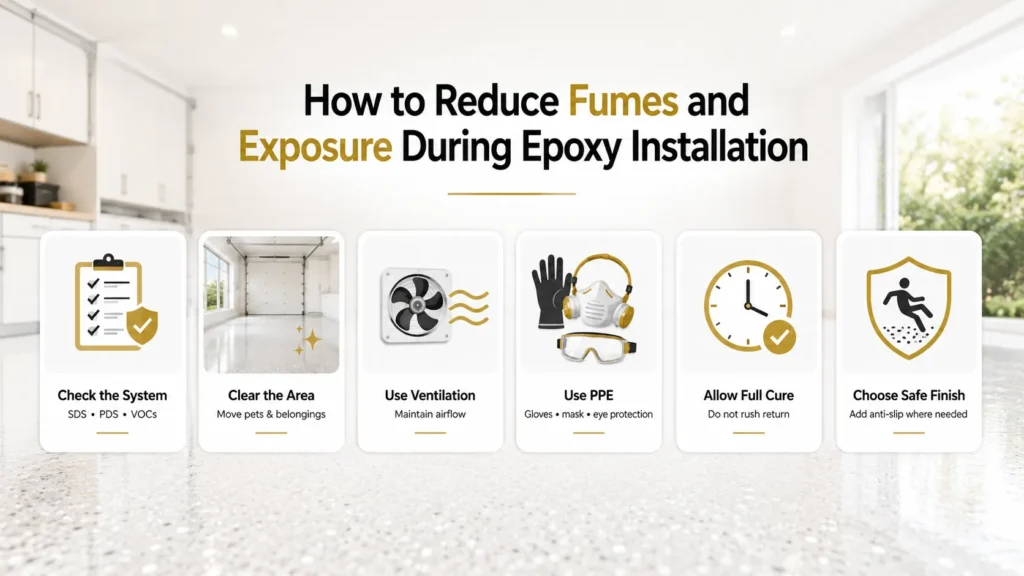
Use these practical controls:
- Request the selected system before installation. Ask for the product name, SDS, PDS, VOC information and cure schedule.
- Plan access around the work area. Move vehicles, pet items, food and stored belongings before work starts. Keep children and pets out until full cure is confirmed.
- Use suitable ventilation. The area should be ventilated according to the product instructions without directing odours into occupied rooms.
- Control direct contact. The installer should use appropriate PPE and prevent wet coating, containers, tools and cleaning products from being left accessible.
- Allow the full cure period. Avoid rushing cars, furniture, pets or household traffic back onto the floor because it looks dry.
- Choose the right finish. Where water, pool splash, grease or wet shoes are expected, specify a slip-resistant finish rather than relying on a smooth glossy surface.
At Apex Epoxy Perth, we use appropriate PPE and safe work procedures in line with Australian WHS practices. We can also explain the selected flooring system, site-access plan and cure requirements before a garage, residential or commercial epoxy flooring project begins.
What Should You Do if an Epoxy Floor Still Smells After Curing?
A mild odour can linger in an enclosed garage or poorly ventilated room, particularly if the area has remained closed during the stated cure period. However, a persistent or strong chemical smell after the documented full-cure time should not be ignored.
Take these steps:
- Keep people and pets out of the affected area until the situation is checked.
- Ventilate the area as advised by the installer and product manufacturer.
- Contact the installer with the product name, installation date and site conditions.
- Ask the installer to confirm whether the cure time, temperature and ventilation conditions were suitable.
- Request the relevant SDS and PDS if you do not already have them.
- Do not sand, heat, seal over or apply chemicals to a coating that may not have cured correctly.
If someone develops coughing, breathing difficulty, dizziness, severe irritation, collapse or a suspected chemical exposure, move them to fresh air where safe and seek medical advice.
In Australia, call the Poisons Information Centre on 13 11 26 for exposure advice. Call 000 for an emergency, severe breathing difficulty, collapse, seizure or severe allergic reaction.
Questions to Ask an Epoxy Flooring Installer About Safety
Ask these questions before accepting a quote or scheduling the installation:
- Which epoxy, primer and topcoat system will you use?
- Can you provide the Safety Data Sheets and Product Data Sheets?
- Is the system water-based, solvent-based, high-solids or solvent-free?
- What is the exact full-cure time for this system in current conditions?
- When can pets, children, furniture and vehicles return?
- How will the area be ventilated and separated from occupied rooms?
- What PPE and dust-control measures will be used during grinding and coating?
- What happens if cold weather, humidity or slab moisture delays the cure?
- Is an anti-slip finish recommended for this area?
A contractor should be able to answer these questions clearly. “It will be fine tomorrow” is not a substitute for a product-specific cure schedule.
Frequently Asked Questions About Epoxy Floor Safety
Is Cured Epoxy Flooring Toxic?
A properly mixed and fully cured epoxy floor has a much lower exposure risk than wet epoxy components. However, safety depends on the specific product, correct installation and full cure according to the manufacturer’s instructions.
Does Epoxy Flooring Keep Releasing Fumes After It Has Fully Cured?
Active curing-related emissions should reduce substantially once the system has fully cured. If a strong odour remains after the stated cure period, contact the installer and product manufacturer rather than assuming the floor is ready for normal use.
Is Epoxy Flooring Safe for Dogs and Cats?
Epoxy flooring can be suitable for dogs and cats after full cure. Keep pets away during preparation, installation and curing, and ask about an anti-slip finish if pets will run across the surface.
Can You Stay in the House While an Epoxy Floor Is Being Installed?
It depends on the product, ventilation, location of the work area and whether fumes can enter occupied rooms. For an attached garage or enclosed indoor area, plan to keep household members and pets away from the work zone until the installer confirms it is safe to return.
Is Water-Based Epoxy Safer Than Solvent-Based Epoxy?
Water-based epoxy can have lower VOC levels than some solvent-based products, but it is not automatically risk-free while wet. Resin, hardener and other ingredients can still require PPE, ventilation and a full cure period.
Conclusion
Epoxy flooring safety is mainly about controlling exposure during the wet and curing stages. The finished floor is not the same as the uncured resin and hardener used to create it.
Choose a suitable system, check the SDS and PDS, maintain ventilation, keep pets and children away during curing, and follow the exact return-to-use schedule.
For a Perth epoxy flooring project, Apex Epoxy Perth can provide a clear product, preparation and cure plan before installation.