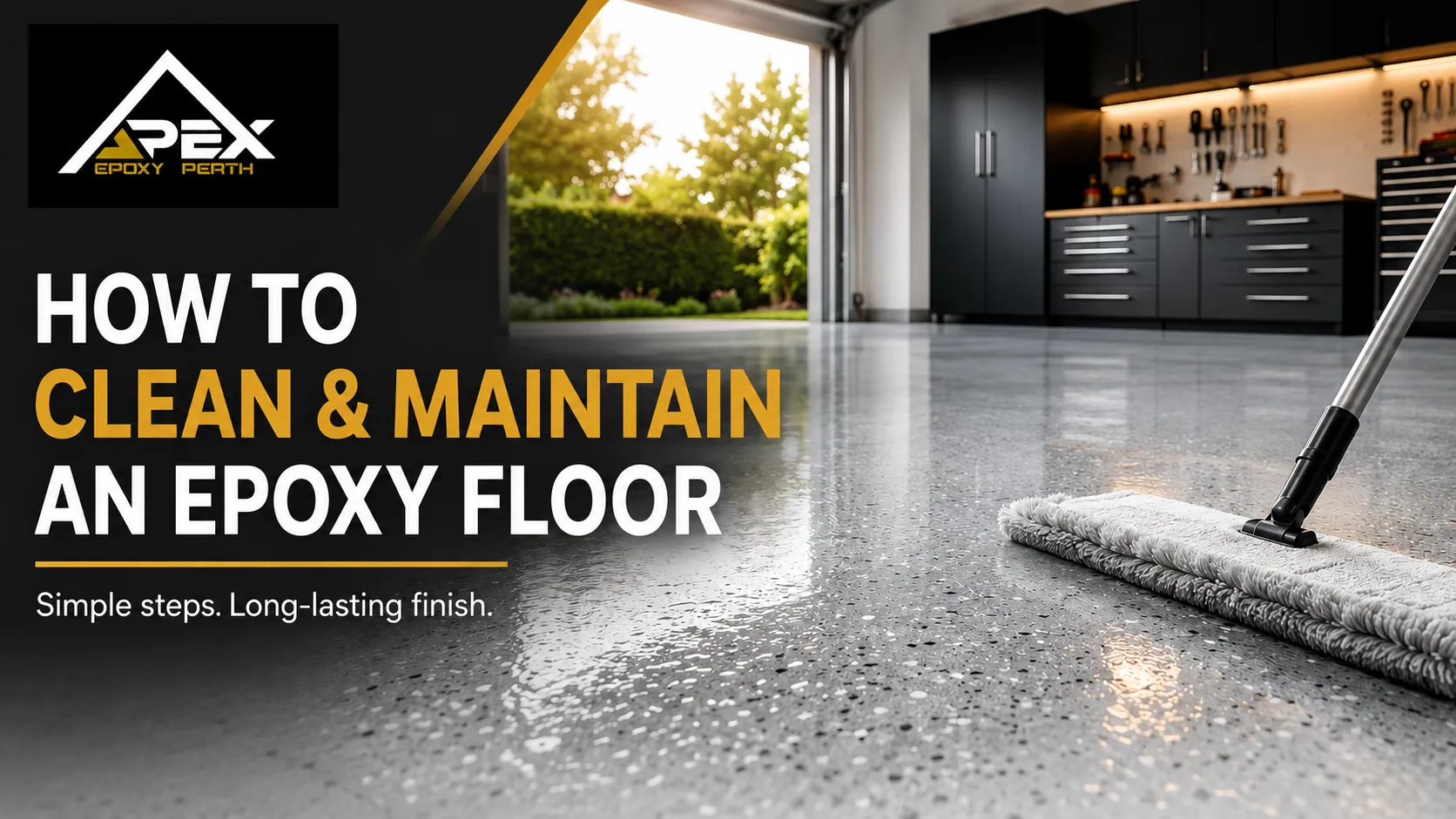

Epoxy flooring is low-maintenance, but it is not maintenance-free. Fine grit, dried cleaning residue, oil, rubber transfer, and unsuitable chemicals can make a floor look dull, reduce slip resistance, or damage the protective topcoat.
The safest routine is simple: remove dry grit before wet cleaning, use a pH-neutral cleaner at the correct dilution, rinse away residue, and deal with spills early. The product used on the floor matters.
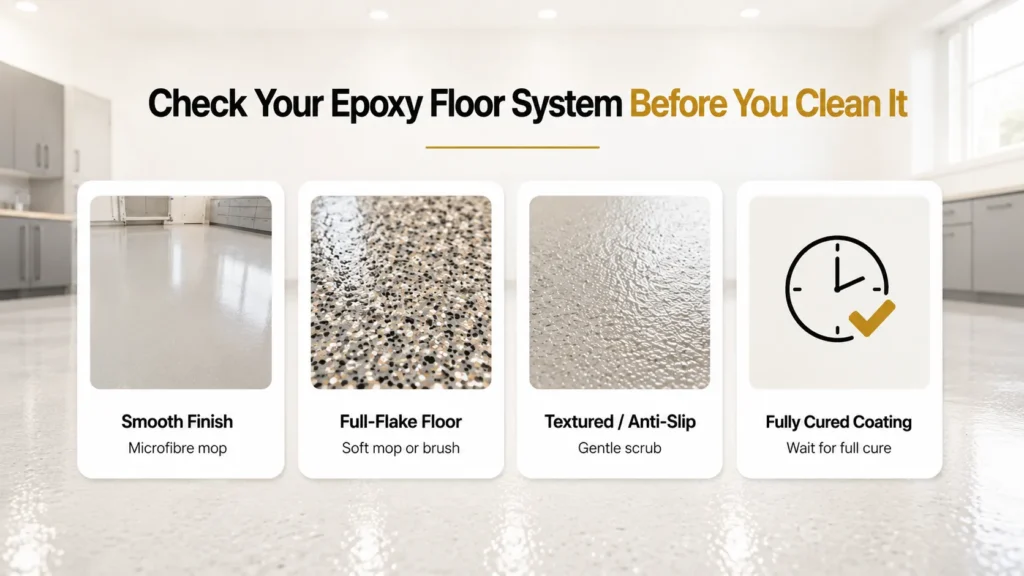
A smooth epoxy floor, a full-flake system, and a textured anti-slip finish do not all need the same cleaning method.
Use a soft mop or brush, clean water, and a pH-neutral cleaner approved for the coating system. Avoid harsh chemicals, abrasive pads, wire brushes, and unapproved solvents.
Check Your Epoxy Floor System Before You Clean It
Check the floor’s finish, texture, and curing status before using a cleaner. The coating may include an epoxy base coat with a polyurethane or polyaspartic topcoat.
That topcoat is the surface being cleaned, so its product data sheet or installer’s care guide should take priority over general advice.
Identify the Topcoat and Floor Texture
The floor texture determines the tool and amount of water needed. A smooth garage floor is usually easy to mop, while a flake or anti-slip surface may hold dirt in its texture and need gentle brush scrubbing.
| Floor type | What to look for | Cleaning approach |
| Smooth epoxy or solid-colour floor | Flat, glossy, or satin surface | Microfibre mop or soft dust mop for routine cleaning |
| Full-flake epoxy floor | Decorative flakes under a clear coat | Soft broom or vacuum, then a microfibre mop; use a soft brush only for embedded dirt |
| Textured or anti-slip floor | Noticeable grip or raised aggregate | Soft nylon brush or a suitable non-abrasive pad, followed by a thorough rinse |
| Outdoor coated concrete | Exposure to leaves, dust, rain, and sunlight | Remove debris frequently and use only cleaners compatible with the outdoor topcoat |
If you do not have the handover information, ask the installer for the exact coating system and recommended cleaner. Do not assume that a product is safe because it is marketed as a general floor cleaner.
Make Sure the Coating Has Fully Cured
Do not detergent-clean a newly coated floor until the installer confirms that the final coat has cured. A floor can be ready for foot traffic before it is ready for wet cleaning, vehicles, heavy loads, or chemical exposure. Cure times depend on the coating chemistry, film thickness, temperature, and humidity.
Use the installer’s handover instructions as the authority. Some coating data sheets specify a separate delay before detergent washing; for example, Rust-Oleum’s OverKote S guide says not to detergent-wash for five days after application.t
What Can You Use to Clean an Epoxy Floor?
Use non-abrasive tools and a coating-safe cleaning solution. Warm water is often enough for light soil. For routine wet cleaning, use a pH-neutral cleaner and follow its dilution instructions exactly. More cleaner does not produce a cleaner floor; excess detergent can leave a hazy film.
Safe Cleaning Tools for Epoxy Flooring
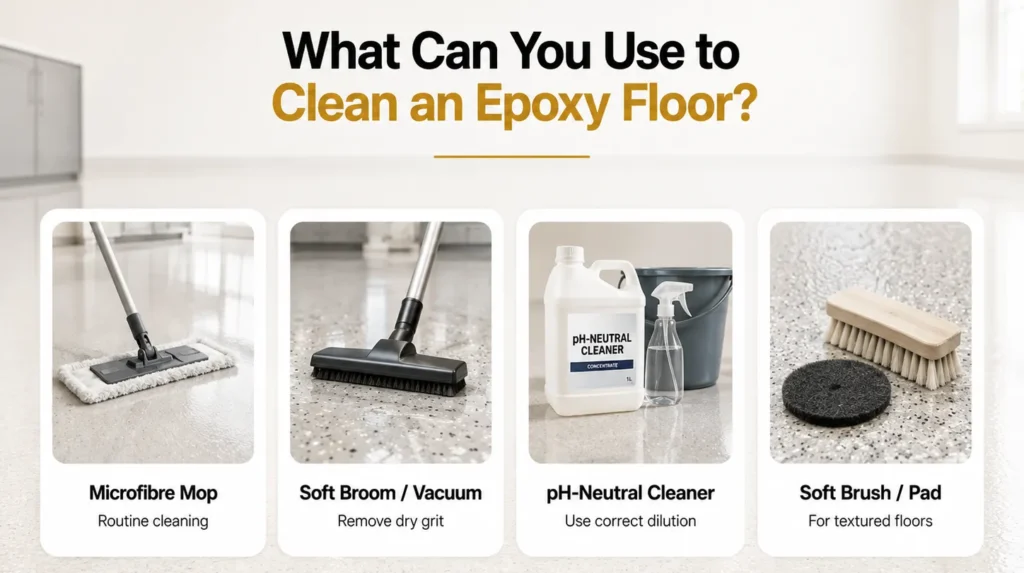
The following tools clean epoxy without unnecessarily scuffing the surface:
- A clean microfibre dust mop or soft-bristle broom
- A vacuum with a soft floor attachment or a wet/dry vacuum for larger garages and workshops
- A clean microfibre wet mop
- A soft nylon deck brush for textured or anti-slip areas
- A white, blue, or other non-abrasive pad approved for the floor system
- A soft rubber or neoprene squeegee for removing rinse water
- Clean buckets reserved for the floor rather than buckets carrying concrete dust, garden chemicals, or automotive residue
Replace dirty mop heads and rinse water before they become grey or oily. Cleaning with contaminated water can spread fine grit and leave a film behind.
Safe Cleaners and Correct Dilution
Use the mildest effective product first. A pH-neutral, non-abrasive cleaner made for sealed hard floors or resin flooring is the safest starting point.
Mix it at the label rate, not by guesswork. For heavier garage soil, use only a water-based degreaser that the coating manufacturer or installer confirms is compatible with the topcoat.
Test any unfamiliar cleaner in a small, hidden area first. Check the area after it has dried for loss of gloss, colour change, stickiness, or haze. This is particularly important for metallic floors, clear topcoats, older coatings, and outdoor systems.
Manufacturer guidance for resin floors commonly recommends water and an occasional pH-neutral cleaner for regular care, with a compatible degreaser followed by a water rinse for heavy soil.
Cleaners and Tools That Can Damage the Finish
Avoid products that can scratch, soften, stain, or leave residue on the coating. The following should not be routine epoxy-floor cleaners unless the coating supplier gives written approval:
| Avoid | Why it is a risk |
| Acidic cleaners, including vinegar and masonry cleaners | Can dull or chemically affect some topcoats |
| Caustic or highly alkaline cleaners, oven cleaners, and strong degreasers | May attack the surface or remove gloss when used too strongly or left too long |
| Solvents, including acetone, xylene, thinners, and adhesive removers | Can soften, stain, or strip some coating systems |
| Concentrated bleach or ammonia products | May discolour or affect a coating when used without compatibility guidance |
| Steel wool, wire brushes, scouring powder, and aggressive sanding pads | Scratch the finish and reduce gloss |
| Wax, polish, or soap-heavy floor products | Can leave a slippery or cloudy build-up and complicate later recoating |
Do not use a cleaner simply because it removes a stain quickly. The correct question is whether it removes the contamination without changing the coating surface.
How to Clean an Epoxy Floor: Step-by-Step
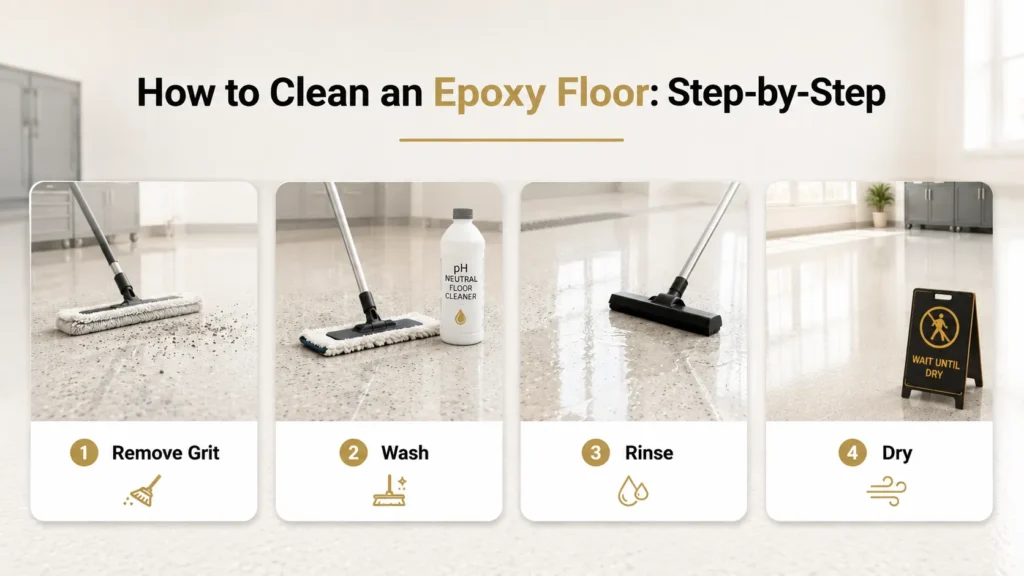
Clean an epoxy floor in stages rather than flooding it with cleaner. Removing loose grit before mopping is the most important part of protecting the finish.
Remove Loose Dirt, Sand, and Grit First
Clear movable items from the area. Dry sweep with a microfibre dust mop or soft broom, or vacuum with a soft floor attachment. Focus on doorways, garage entrances, work benches, and edges where sand and dust collect.
Grit acts like an abrasive when it is dragged under a mop, tyre, chair leg, or storage item. Pick up sharp debris by hand instead of pushing it across the floor.
Wash the Floor With a pH-Neutral Cleaner
Mix the cleaner according to the label. Work in small sections so the solution does not dry on the floor. Mop with a clean microfibre mop using light, overlapping passes.
For a textured, full-flake, or anti-slip surface, use a soft nylon brush or a suitable non-abrasive pad to lift soil from the texture. Do not use a wire brush or a harsh scrub pad to force dirt out of the surface.
Rinse Away Cleaner Residue
Rinse the area with clean water when the cleaner label or the level of soil requires it. Collect the dirty water with a squeegee, wet/dry vacuum, or clean mop. Change rinse water regularly.
This step matters because detergent residue can make epoxy look cloudy, feel slippery, and attract more dirt. Do not use a mop to spread oily water over the floor; remove or vacuum the oil first.
Dry the Floor Before Resuming Traffic
Remove standing water with a squeegee or dry microfibre mop and allow the floor to air dry. Keep vehicles, furniture, foot traffic, and stored items off the area until it is dry.
Drying prevents slip hazards and stops dust or tyre marks from sticking to a damp surface. Check the floor in good light once it is dry. A uniform finish means the cleaning solution has been removed properly.
How to Remove Common Epoxy Floor Stains Safely
Treat stains as soon as possible and start with the mildest method. Never move straight to solvents, acid, or abrasive scrubbing. If the stain is from an unknown chemical, check its safety data sheet before attempting to clean it.
Oil, Grease, and Vehicle Fluid Spills
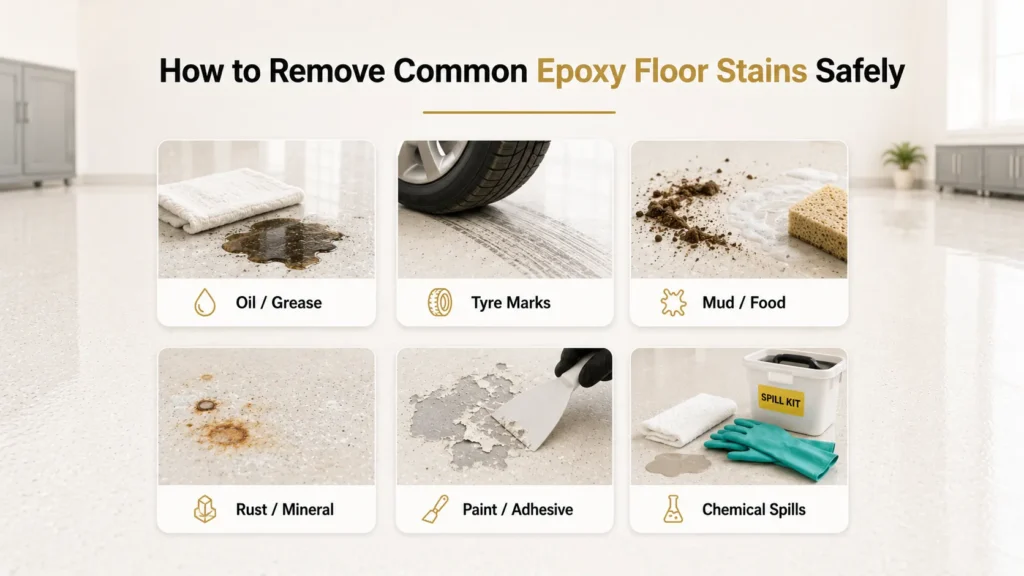
Absorb oil, grease, brake fluid, or coolant immediately with an absorbent material. Lift the absorbent rather than sweeping it across the floor. Then clean the affected area with a coating-safe degreaser, a soft brush, and clean water.
- Contain the spill and keep it away from floor edges and drains.
- Absorb the liquid with a suitable absorbent product or clean disposable material.
- Lift the material with a plastic scraper or scoop.
- Apply a compatible cleaner at the recommended dilution.
- Agitate gently with a soft brush, rinse, and dry the area.
Do not leave oil under a mop. It can spread across a larger area, create a slip risk, and leave a residue that is harder to remove.
Rubber Tyre Marks
Rubber tyre marks are usually surface transfer, not a failure of the epoxy. Clean them with warm water and a pH-neutral cleaner first. For stubborn marks, use a coating-approved cleaner with a soft brush or non-abrasive white pad, then rinse.
Avoid thinners, aggressive solvent cleaners, and hard scrubbing. They may remove the mark, but they can also alter the gloss or soften the topcoat.
Prevent repeat marks by keeping tyres clean and allowing a new coating to reach its specified full cure before vehicles use it.
Dried Mud, Food, and Household Spills
Soften dried mud, food, pet mess, or ordinary household spills with warm water and a pH-neutral cleaner. Lift the material with a plastic scraper if needed, then mop and rinse the area.
Do not use a metal blade, screwdriver, or scraper. Sharp tools can cut the topcoat, especially on smooth solid-colour floors.
Rust, Mineral, and Hard-Water Marks
Rust and mineral deposits need more care than normal dirt. Do not use a masonry acid, vinegar, or a rust remover unless the coating supplier confirms it is safe for the exact topcoat. Acidic products can leave a permanent dull patch or colour change.
Start with a pH-neutral cleaner and a soft brush. If the mark remains, contact the installer or coating supplier with photos and the product details. Persistent marks may need a system-specific spot treatment or a small professional repair.
Paint, Adhesive, and Dried Material
Use a plastic scraper to remove loose paint, tape residue, or dried material. For anything bonded to the floor, confirm the coating-safe removal method before using an adhesive remover or solvent.
Do not use acetone, paint thinner, or a razor blade as a default solution. These methods can damage the clear coat more visibly than the original mark.
Chemical Spills
Treat chemical spills according to the product’s safety data sheet and the floor system’s chemical-resistance information. Wear suitable personal protective equipment. Do not mix cleaners to neutralise an unknown liquid, and do not wash it into a drain.
Some epoxy systems resist particular oils, fuels, acids, or alkalis, but no coating is resistant to every chemical at every concentration or contact time.
For a large, unknown, corrosive, or hazardous spill, isolate the area and follow the site spill-response procedure before cleaning.
How Often Should You Clean an Epoxy Floor?
Clean an epoxy floor according to the amount of soil it receives, not a fixed calendar rule. Dust, sand, moisture, oils, and vehicle traffic increase the cleaning frequency needed.
Industry maintenance guidance also recommends adjusting the schedule to the work environment and the amount of accumulated soil.
Use this table as a starting schedule, then increase cleaning when the floor looks dusty, feels gritty, or receives a spill.
| Area and traffic level | Remove dry debris | Wet clean | Clean immediately |
| Low-traffic indoor room | Weekly | Every 2–4 weeks or when soiled | Water, food, pet, and household spills |
| Home garage | Weekly and after dusty work | Every 2–4 weeks; more often during wet weather or heavy use | Oil, vehicle fluids, tyre marks, and road grime |
| Outdoor coated area | Weekly or after wind and rain | Monthly or when dirt builds up | Leaves, mud, pool water, food, and chemical spills |
| Workshop, warehouse, or busy commercial area | Daily or each shift in high-traffic zones | Weekly or to the site cleaning schedule | Oils, chemicals, water, and safety hazards |
How to Maintain an Epoxy Floor Between Cleans
Good daily habits reduce the need for aggressive cleaning. They also protect the topcoat from damage that no cleaner can reverse.
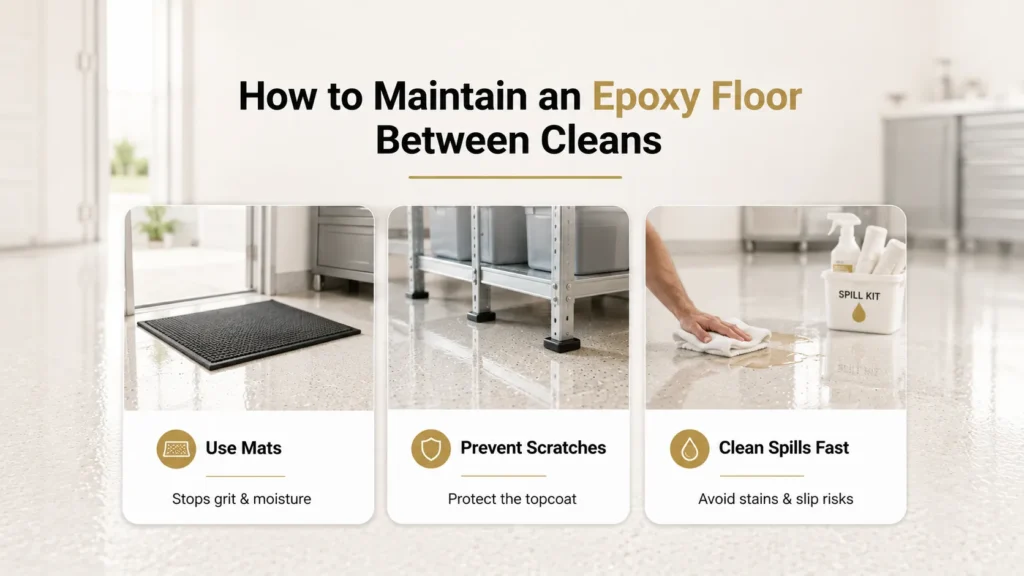
Use Mats to Reduce Grit, Moisture, and Road Contamination
Place non-staining entry mats at doors and garage entrances to catch sand, soil, and moisture before they reach the coating. Clean the mats regularly; a dirty mat no longer stops grit.
Check mat backing before leaving it in one place for long periods. Some rubber or vinyl materials can transfer colour or plasticisers to a coated floor. Test an inconspicuous spot if you are unsure.
Prevent Scratches, Gouges, and Impact Damage
Use protective pads under furniture, shelving, appliances, and equipment. Lift heavy items rather than dragging them. Use plywood, sliders, or suitable wheel protection when moving toolboxes, machinery, pallets, or heavy storage.
Take extra care with the following items:
- Metal legs, sharp tool edges, and garden equipment
- Heavy cabinets and loaded shelving
- Jacks, stands, and narrow point loads in garages
- Pallets, trolleys, and hard castor wheels in commercial areas
- Dropped tools, fasteners, and sharp debris
Clean Spills Before They Mark or Affect the Topcoat
Wipe up spills immediately, even when the coating is described as stain- or chemical-resistant. Fast removal limits staining, slip risks, and the time a chemical remains in contact with the topcoat.
Keep a simple spill kit in garages and workshops: absorbent material, disposable gloves, plastic scraper, clean rags, a pH-neutral cleaner, and a coating-safe degreaser approved for the floor.
When Cleaning Will Not Fix an Epoxy Floor Problem
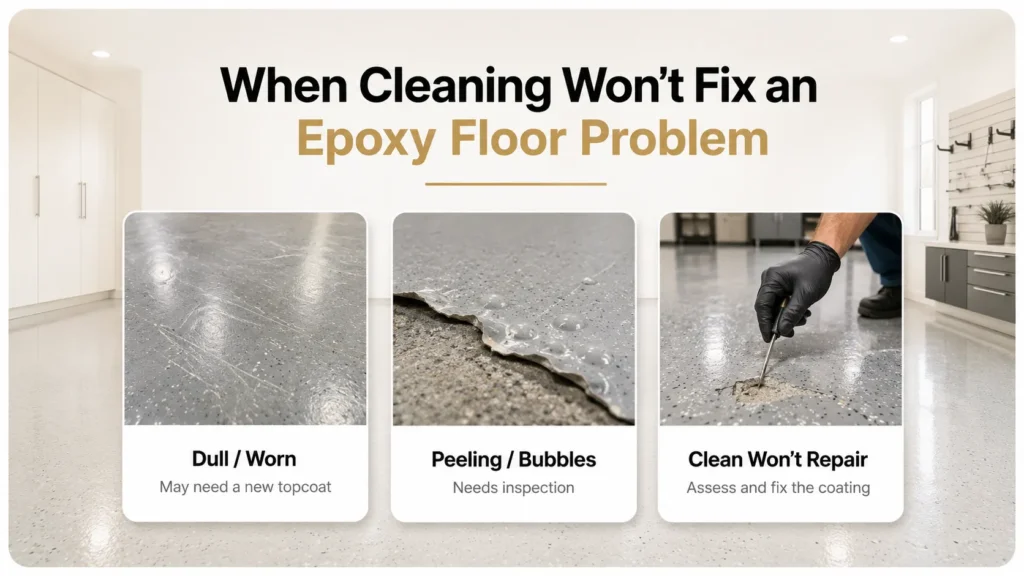
Cleaning removes contamination. It cannot repair a worn, scratched, or poorly bonded coating. Stop using stronger chemicals when normal cleaning does not improve the surface; stronger products may make the condition worse.
Loss of Gloss, Scratches, and Surface Wear
Loss of gloss can come from detergent residue, fine abrasion, sun exposure, or normal topcoat wear. First, dry-clean the floor, wash it with the correct diluted pH-neutral cleaner, rinse it thoroughly, and allow it to dry.
If the surface still looks dull, the issue may be in the topcoat rather than on it.
Do not apply wax or a high-gloss polish to hide the problem. It can create a patchy appearance and may need to be removed before a future maintenance coat.
An installer can assess whether a clean-and-recoat, local repair, or new topcoat is appropriate.
Chips, Deep Gouges, Peeling, or Delamination
Chips, deep scratches, lifting edges, bubbles, and peeling need inspection. These problems can allow moisture or contamination beneath the coating. They may result from impact damage, slab moisture, substrate movement, failed preparation, or an incompatible previous coating.
Arrange an assessment when you notice:
- Peeling at edges, cracks, joints, or tyre paths
- Bubbles or blisters under the coating
- Deep cuts that expose concrete
- A persistent sticky, soft, or discoloured area
- Repeated loss of topcoat in the same location
Early repair is usually simpler than waiting for damage to spread across a larger area.
Frequently Asked Questions About Cleaning Epoxy Floor Coating
Can You Pressure Wash an Epoxy Floor?
Avoid pressure washing epoxy floors as a routine cleaning method. Use a low-pressure rinse only if the installer confirms it is suitable for the system, and never direct high-pressure water at edges, joints, cracks, or damaged areas.
Can You Use Vinegar, Bleach, Ammonia, or Degreaser on Epoxy?
Do not use vinegar, concentrated bleach, ammonia, or strong degreasers as routine cleaners unless the coating supplier approves them. Use warm water and a pH-neutral cleaner first. Use a compatible degreaser only for oil or heavy soil, then rinse it away.
Can You Steam Clean an Epoxy Floor?
Do not steam-clean an epoxy floor unless the coating manufacturer specifically permits it. High heat and moisture can affect some topcoats, and steam can push water into cracks, joints, lifting edges, or damaged areas.
How Do You Make a Dull Epoxy Floor Shine Again?
Remove grit and detergent residue before assuming the coating has failed. Dry-clean the floor, wash it with a diluted pH-neutral cleaner, rinse it well, and let it dry. If the gloss does not return, the topcoat may need professional maintenance or recoating.
What Causes an Epoxy Floor to Peel After Cleaning?
Cleaning usually reveals an existing adhesion problem rather than causing a sound epoxy floor to peel. Common causes include poor surface preparation, moisture beneath the coating, slab movement, impact damage, or an incompatible coating underneath.
Conclusions
An epoxy floor stays easier to clean when dry grit, spills, and detergent residue are removed before they build up. Use soft tools, a correctly diluted pH-neutral cleaner, clean rinse water, and the maintenance instructions for the exact coating system.
Do not use abrasive pads, strong chemicals, or solvents to solve ordinary dirt or marks. If the finish stays dull after proper cleaning, or you find chips, lifting, or peeling, treat it as a coating issue rather than a cleaning problem.
For Perth epoxy floors that need an inspection, repair, or maintenance topcoat, Apex Epoxy Perth can assess the surface and recommend the appropriate next step.